Share
Colonial Architecture in Santo Domingo: Our Cultural Legacy
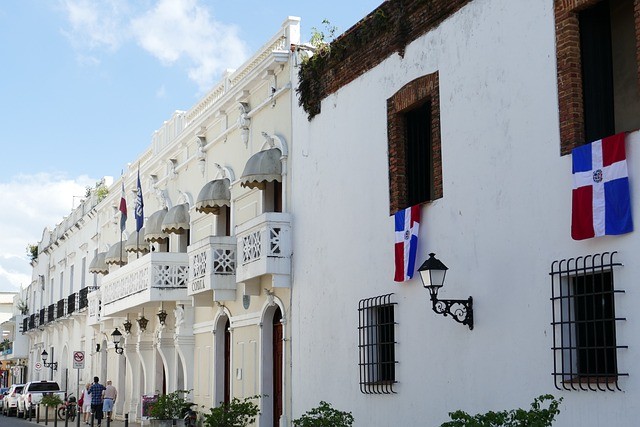
Santo Domingo, established in 1496 and recognized as the first city founded by Europeans, is far more than a mere historical landmark. It is a dynamic space where the traces of the past endure in every cobblestone street, coral stone wall, and church that harbors centuries of faith and tradition.
The colonial architecture in Santo Domingo represents an incomparable cultural legacy, a testament to new ways of building and living that forever imprinted the Caribbean and, by extension, all of America.
The so-called Ciudad Colonial was declared a UNESCO World Heritage site in 1990. Within its 106 blocks are over 300 colonial buildings that transform this area into an open-air museum, where history and modernity coexist harmoniously. This architectural wealth not only reflects European styles adapted to the tropics but also the cultural fusion that gave birth to a unique Dominican identity.
The 16th Century Architectural Language
Colonial architecture in Santo Domingo originally aimed to replicate European models in a new and unfamiliar territory. Initial buildings were constructed from simple materials like wood and clay, but soon gave way to more solid limestone and brick structures. The Primate Cathedral of America, initiated in 1512 and completed in 1540, symbolizes this process: a late Gothic work with Renaissance influences representing the introduction of European monumentality to the continent.
The manorial houses, meanwhile, combined interior courtyards with arcades that allowed ventilation in a warm, humid climate. The high ceilings and thick walls were both an aesthetic and functional response, adapted to the natural surroundings of the Caribbean. This interplay between form and necessity created a unique style, recognizable in structures like the Casa del Cordón, considered the first stone dwelling in America.
Monuments
Colonial power was materialized in several constructions that remain standing today as witnesses of an era. The Ozama Fortress, built in 1502, is the oldest European fortress on the continent. Its military design, with watchtowers and thick walls, reflects Santo Domingo’s strategic importance as a control point in the Atlantic.
The Alcázar de Colón, the residence of Diego Colón —son of Christopher Columbus and the first viceroy of the Indies—, serves as another emblematic example. This palace, in Gothic-Mudejar style with Renaissance elements, reflects the opulence of colonial elites and their aspiration to replicate in America the splendor of European nobility.
Convents and churches also stand out, such as the Monastery of San Francisco, the first monastic construction in the New World, and the Dominican Convent, where the first classes were taught that gave rise to the University of Santo Tomás de Aquino, the first university in America.
Everyday Life in the Ciudad Colonial
Beyond the monuments, the colonial architecture of Santo Domingo was the stage for the daily lives of its inhabitants. Neighborhoods were organized around the Plaza de Armas —now Parque Colón—, where the populace gathered for commercial, religious, and social activities.
Colonial homes addressed not just aesthetic principles but also a way of life centered on family, community, and commerce. The interior courtyards were spaces for gathering and nature within the home. Streets laid out in a checkerboard pattern, following the European urban model, facilitated city traffic and organization.
This urban design would later be replicated in many Latin American cities.
The Cultural Legacy and Its Continuity
The value of Santo Domingo's colonial architecture resides not only in its centennial structures. Its importance is also symbolic, as it embodies the visible roots of a cultural process that gave birth to Dominican identity. The buildings are the living memory of the blend between Europe, Africa, and America, a mix that defines the music, gastronomy, language, and idiosyncrasies of today's Dominican Republic.
Preserving this heritage is, therefore, a collective commitment. Over the years, public and private institutions have engaged in restoration initiatives that help maintain the original splendor of these buildings. Today, the Ciudad Colonial is not only a tourist destination but a vibrant place that combines bars, museums, galleries, and restaurants in an unparalleled historical setting.
Walking through calle Las Damas, visiting the Primate Cathedral, or exploring the Ozama Fortress is connecting with the roots, while also understanding how the past continues to shape the present.
Modernity and Tradition: The Necessary Balance
In 21st century Santo Domingo, colonial architecture coexists with modern buildings, shopping centers, and cutting-edge developments. The city has reinvented itself, maintaining the essence of its past while embracing modernity.
The integration between tradition and contemporaneity remains a constant challenge, yet also an opportunity for new generations to value and take ownership of their cultural heritage. Each restoration project, every urban revitalization initiative, and every endeavor strengthens the bond between who we were and who we are.
Noval Properties and Jardines de Bellas Artes
At Noval Properties we understand that architecture transcends mere construction: it is culture, identity, and a vision of the future. Thus, our commitment to Santo Domingo is inspired by respect for history and a vision for urban development that blends modernity, elegance, and authenticity.
Our Jardines de Bellas Artes development, located in the city’s heart, embodies this philosophy. Conceived as an exclusive residential space, it integrates contemporary design, comfort, and proximity to one of the nation’s most significant cultural centers: the Palacio de Bellas Artes. This development demonstrates our dedication to creating homes that not only offer quality of life but also dialogue with Santo Domingo's historical and artistic legacy.
Contact us
Every great investment starts with a conversation. Write to us and discover why hundreds of clients trust Noval to build their future.
+1 809 349 9677
info@novalproperties.com