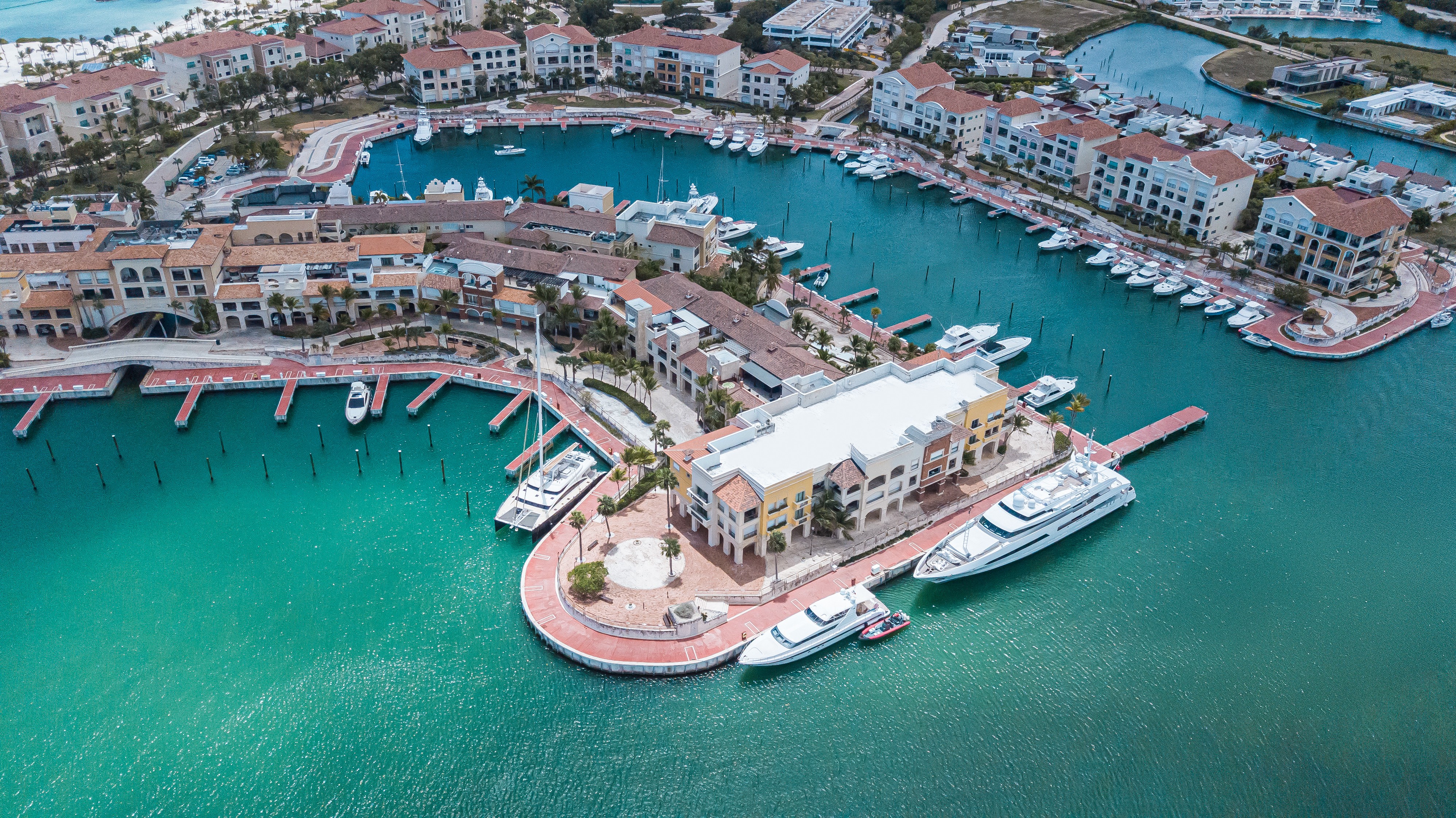
Investing in the Dominican Republic: The 2026 Guide for Latin American Investors

If you hold capital in pesos, soles, or reals and watch it lose value every year, the Dominican Republic is likely the conversation you are not yet having, and should consider. For a Latin American, investing in the Dominican Republic means something highly concrete: moving a portion of your wealth into a tangible, US dollar-denominated asset that generates tourism rental income and, thanks to a specific law, can remain tax-free for 15 years.
This guide is not written for tourist lodging or for high-net-worth European estates with an entourage of advisors. It is designed for the buyer-investor seeking to diversify outside of their home country without falling for inflated promises. It is written from the builder’s perspective. We are NOVAL Properties, a developer with a 22-year track record and over 3,000 units delivered in the country. This changes the depth of what we can share: we do not sell brochures; we construct the buildings.
Why investing in the Dominican Republic makes sense for Latin American investors
The ultimate reason is not the Caribbean climate; it is the currency. When you invest here, your assets and yields are denominated in US dollars, insulated from inflation and foreign exchange controls in your home country. For investors in Argentina or those operating in Colombian pesos, this point alone justifies looking seriously at the market.
On this foundation, the country delivers solid figures. The Dominican economy has grown at over 5% annually for much of the past decade, remaining one of the highest and most stable growth rates in Latin America. Tourism exceeds 10 million visitors per year, supporting sustained, genuine demand for vacation rentals rather than speculative estimates. Furthermore, the entry of major brands like Meliá, Hilton, Marriott, or Four Seasons is revealing: it marks where land value is actively appreciating.
You would not be entering this market alone. In South Florida—the main benchmark for Latin American real estate acquisitions—Colombia leads international buyers at roughly 15%, followed by Argentina at 12%, and Mexico and Brazil at 7% each. The same regional capital that diversifies in Miami is looking to the Dominican Republic for an intuitive reason: notably lower entry points for comparable assets, located just a three- to four-hour flight away.
Additionally, there is a major benefit that is rarely explained clearly: much of Latin American diversification is defensive, designed to move capital away from volatile environments. The Dominican Republic allows this without the regulatory friction of the United States or Europe, offering full property rights to foreigners and entry levels in US dollars that would not even open doors in other markets. We discuss this in depth in our guide on investing abroad from Latin America.
The CONFOTUR Law: why your property can be tax-free for 15 years
This is the key tax incentive that is virtually unique in the region. Law 158-01, known as CONFOTUR, was designed to attract investment to approved tourism developments. If you acquire a property within a qualifying development, the benefits are tangible and immediate from day one:
Exemption from the 3% property transfer tax. On a US$200,000 property, this saves you US$6,000 in closing costs.
Exemption from the Real Estate Property Tax (IPI) for 15 years. The 1% annual recurring tax usually levied on assets exceeding the exempt threshold is completely eliminated for a decade and a half.
Exemption from rental income tax. The rental yields generated by the property are exempt from Dominican Republic income tax during the statutory exemption period.
In practice, CONFOTUR is not just an appealing discount: it fundamentally changes return calculations. The same development with and without CONFOTUR can see a difference of several percentage points in net yield. For this reason, it is always essential to verify that the development is fully approved, rather than simply pending approval. If you want step-by-step details on how to apply the law and what to verify before signing, you can find them in our complete guide to CONFOTUR.
What you can actually earn by investing in Dominican Republic real estate
Let us look at the numbers. In high-demand resort markets like Punta Cana or Cap Cana, a well-located, professionally managed property typically yields between 6% and 10% net annual rental income. Some premium operators with hotel management program projections show higher figures, but these depend on sustained occupancy and rigorous management; they do not happen on their own.
Capital appreciation is added to rental yields. Buying off-plan, when both the development and the developer are reliable, typically generates an appreciation of 15% to 20% between launching and delivery. This is the portion of the return that many buyers underestimate: it is not just what you lease, but what the asset is worth upon completion.
Now, the caveat that generic sales pages omit: an exceptionally high projected yield, unsupported by actual occupancy data or market comparables in the area, is a red flag rather than an opportunity. If you want to run the numbers with concrete scenarios on a real apartment, visit our return-on-investment analysis for an apartment in Punta Cana, where we break down ROI with practical cases.
What type of investor are you? Three profiles buying here
Not everyone invests in the Dominican Republic for the same reason, and the optimal asset changes according to your objectives. In our 22 years of experience, we have identified three core profiles. Pinpointing yours can save you months of misdirected searching.
1. The hands-off yield investor
This investor seeks yield without operational involvement. They acquire an apartment in a development with structured hotel management, activate the listing, and collect payouts. Occupancy, the operator’s track record, and the management agreement are their main priorities. This profile aligns perfectly with mid-to-high entry-point properties in resort settings, ranging around USD $345,000 as seen in developments like Poseidonia Residences.
2. The vacation home buyer seeking returns
This buyer wants to enjoy the Caribbean for a few weeks a year while letting the asset work the rest of the time. They seek a balance between personal use and monetization. For this profile, beach club and golf amenities carry as much weight as yields, and they typically operate in the same mid-to-high price range with usage flexibility.
3. The wealth diversifier
For this investor, real estate is a hedge: a way to move capital away from local markets and anchor it in a US dollar-denominated asset within a stable country. They prioritize wealth preservation over maximizing yields. This profile targets villas and premium properties, where entry points start at higher figures and the primary goal is asset preservation rather than monthly cash flow.
If you are at an earlier stage, still deciding whether real estate is your vehicle of choice, start with how to invest in real estate from scratch and return here once your path is clear.
Where to invest in the Dominican Republic: key locations
The country is expansive, and different regions serve distinct investment strategies. These are the four markets that concentrate meaningful investments for our client profile, along with the rationale behind each:
Punta Cana / Cap Cana. The primary tourism hub with the highest rental demand and consolidated hotel management structures. Perfect for hands-off yield and yield-generating vacation homes.
Cana Bay. A golf resort enclave within Punta Cana, featuring branded investment properties. Ideal for hybrid wealth diversifiers seeking a blend of personal use and yield.
Las Terrenas. Bespoke coastal properties and boutique developments, with a strong European and Latin American buyer presence. Fits premium vacation homes and lifestyle-driven assets.
Santo Domingo. Urban diversification featuring long-term rentals, with less seasonal volatility. Best suited for the wealth diversifier looking for stable tenancy yields.
NOVAL operates precisely along this axis—Punta Cana, Cana Bay, Las Terrenas, Santo Domingo, and Juan Dolio—because these locations feature genuine demand and capital appreciation backed by fundamentals rather than marketing rhetoric. Each of our portfolio developments is positioned in these markets for a specific investment rationale, not for aesthetic appeal alone.
How to buy as a foreigner: the step-by-step process
First, the positive news: foreign purchasers acquired properties in the Dominican Republic with the same legal rights as Dominican citizens. There are no restrictions, no local partner requirements, and no residency requirements. When properly guided, the process is transparent. Here are the steps:
Define your real objective and budget. Determine if it is for yield, personal use, diversification, or a combination. This guides the location and asset selection before searching begins.
Evaluate the developer, not just the digital render. Review track record, delivered units, and delivery timeline adherence. This is the variable that safeguards your capital most effectively.
Verify the CONFOTUR status of the development. Ensure it is fully approved rather than simply in progress. This materially impacts your net yields.
Reserve your unit and sign the promise of sale. Ideally, work with independent counsel to review titles and contractual conditions.
Structure payment or financing. Off-plan payments are staged; Dominican banks fund foreign buyers under specific borrowing conditions.
Closing and title registration. Legal counsel manages the transfer with the Title Registry. At this stage, the 3% transfer tax exemption is applied.
Step five typically raises the most questions. If you plan to leverage your purchase from abroad, read how to finance your property in the DR as a foreigner first: real options are more structured than you might expect, and it is best to understand them before committing.
The risks other investment guides omit
If an investment guide only presents the positive aspects, it is selling, not informing. These are the real risks and how they are managed:
Inflated occupancy rates. Yield projections sometimes assume the occupancy of five-star flagship hotels. Always request historical occupancy rates for the area and the specific operator, rather than relying on optimistic averages.
Buying from abroad without security. Hesitations regarding buying a property without physically visiting it are understandable. This is mitigated by choosing a developer with a verifiable track record, clear contractual terms, and, when possible, visiting or appointing a trusted local representative.
Delays in delivery. With off-plan purchases, the primary risk is not price fluctuation but delivery delays. Therefore, the track record of the developer carries more weight than any digital render.
Unrealistic capital appreciation expectations. A 15-20% appreciation off-plan is achievable in high-quality developments, but it is not guaranteed across the board. Real estate locations, entry phases, and developer quality determine these numbers.
Our approach. The concerns raised above are exactly what we discuss each week. Our response is not a promise: it is backed by 22 years of experience, over 3,000 units delivered, and 6,500 under development. When buyers ask for proof, we guide them through completed properties they can visit. This is the difference between an agency selling expectations and a developer taking ownership of what they build.
Next Steps: how to begin without missteps
You do not need to have everything figured out to take the first step; you just need to make the right initial move. In sequence: clarify your objective, establish an honest budget, choose an area that aligns with your goal, and screen developers by track record before committing to a specific unit. The rest is structured guidance.
To move forward, you can browse our investment-ready apartments in Punta Cana directly, or speak with our team to evaluate together which option best fits your profile and original currency. No sales pitches: just facts and financial projections.
Is investment in the Dominican Republic secure for foreign buyers?
What is the minimum capital required to begin investing?
What yield can I expect from a residential asset in Punta Cana?
Contact us
Every major investment begins with a conversation. Contact us to discover why hundreds of clients trust Noval to build their future.
+1 809 349 9677
info@novalproperties.com
Leader in tourist real estate development.
Subscribe to our newsletter and receive the latest information about our projects and events.